Tuesday, September 1, 2009

Twitter: Follow You, Follow Me


To begin, all Twitter users know the difficulty in converting others. We usually get interrupted by the inevitable question, "But, why would I want to do that?" Our response is often an ineffectual, "No, but it's fun." Not a ringing endorsement. What I mean to tell others is that it's not about what you had for breakfast (well, sometimes) or keeping to the 140 character limit. It's about developing a group of friends or connections who happen to--usually--share interests and opinions.

One trait I think most twitterers share is curiosity. Curiosity about the arts, the news, the world at large. Other cultures, other ways of thinking. Twitter is a natural magnet for those people. In the same way that those with a more parochial outlook may truly find the social network useless.

Sometimes, a friend will ask, "So, who's in your followers and following lists?" I'm never sure where to begin or where to end. I think I have the most eclectic and fascinating group of people in the twitter universe. But, I always hesitate before replying because I'm well aware that I could sound delusional. "Let's see, " I might begin, "along with friends I hang out with here--one very cool friend in particular, there's a really talented, crazy-busy film editor in New York City, a notably impressive photographer, a wonderful Apple expert, a Venezuelan rocker, a gourmet Libertarian, a composer who always makes me laugh, several solid filmmakers and writers (talk about crazy-busy!) --including one who's got a lovely French film project in the works, an encouraging fellow writer in Chicago, a whole TRIBE of terrific geek friends, an outstanding-in-many-ways artist at The Ranch, impressive English writers, two great people in Australia, a creative woman in Michigan who shares my insomnia and humor, ..." as they glaze over, I may add, "Oh, and an astronaut." It all sounds just a bit deranged.

The next question is even harder. "But, are they friends?" Hmm. On one hand, that would be dependent on the way each individual would answer the same question. Yet, we check in whenever we have the time, often throughout the day. We share joy, dismay, anger, humor, and elation. Often, when everyone else is fast asleep, we're at our keyboards, wondering why we're so sleep deprived. We encourage each other, we challenge each other.

I'm really not sure what else would be needed to define "friend".


Monday, August 24, 2009

District 9

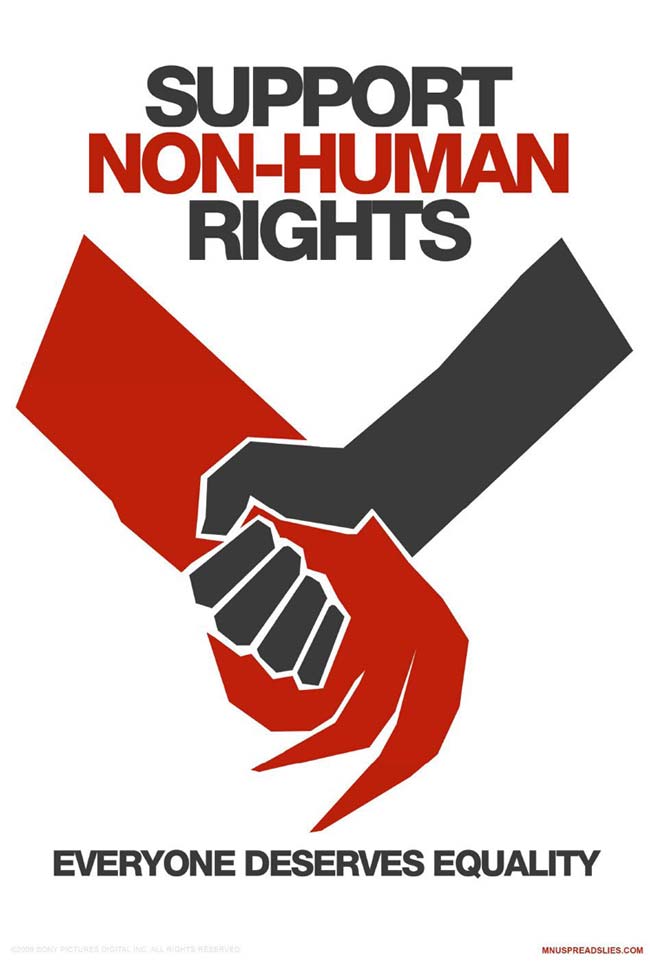
The first thing I'd say about District 9 is that it is not a film solely for sci-fi fans. It is, however, a welcome return to intelligent sci-fi for those who have been waiting and waiting. It's about ideas and ethics and I don't seem to remember weighty issues going through my mind after Transformers 2.

Most people who did their homework know that this is Neil Blomkamp's directorial debut (after a film adaptation of the Halo franchise, partnered with Peter Jackson, fell through). It's frequently mentioned that Blomkamp was born in South Africa. The kind of horrific settlement actually used for South African racial segregation, prior to apartheid's 1994 end, was used as the set for District 9. It's sobering when you realize the indignation you feel about aliens being so cruelly housed was a human reality for so long. Blomkamp has said the comparisions are inevitable, but he didn't want to hit the audience over the head with it. It's still an unavoidable link.

The movie begins as a documentary and immediately introduces the main character, Wikus van de Merwe, a debut performance by Sharito Copley. For two decades, an alien mothership has stalled over Johannesburg, South Africa and over a million aliens have been rescued and settled in District 9. The small, filthy shacks, with piles of trash everywhere, make up their new homeland. But, humans have become tired of the aliens, who have become scapegoats for any number of problems. Wikus' high profile assignment is to relocate the aliens to a new settlement, District 10, which will be worse than their current environment.

The transformation, both literal and figurative, of Wikus is simply mesmerizing. By the end, we're left wondering if one needs to lose their human nature to become humane. And to wonder what "humane" really means. At the end of a summer so full of empty spectacles, District 9 is a film of weight and meaning. Go there.

Friday, August 14, 2009

It's What I Do


When I initially mention to someone that I homeschool my son, I always wait to watch for a visible reaction. I wonder if their thoughts are what mine were when I first heard about "homeschooling": horror. How can sane parents remove their children from the daily norm of all their peers? Why would they do such a thing? What about socialization?

Well, in our case, it had never been the plan. Our son has always been very bright. Early on, it was clear he had some auditory focusing issues that made it extremely difficult to absorb information in a traditional classroom setting. We were told at Vanderbilt University, where--okay, I'm going to brag for a moment-- he became part of the Einstein Syndrome database, that the best recommendation would be to homeschool our son. And, if like most parents, you're determined to do what's best for your child, you step up to the plate. You just do it.

So, it had never been the plan, but it turned out to be a decision we've never regretted. Of course, there are moments that are less than thrilling, such as revisiting algebra and defining the differences between a noun in apposition vs. an objective complement or cognate object. Diagramming sentences. The words, "When will I ever have to use this?" have come back to haunt me.

Still, as any homeschooling parent knows, you suddenly have so much creativity in what you can add to your child's curriculum. Model of the Colosseum made with real stone? Check. Painting hieroglyphics to communicate messages? Check. Film a documentary about your neighborhood? Coming up. The discovery that travel is much cheaper when traditional schools are in session has allowed us to explore modern art at MoMA in NYC, science at Philadelphia's Franklin Institute and history at Independence Hall, collections at the Smithsonian in Washington, D.C., the Children's Museum in Seattle, Old Town San Diego. The list goes on. It's a different kind of education, and a wonderful one. (To assure some readers, our son has taken TaeKwonDo lessons three times a week for over six years now and participates in a weekly Co-Op, along with other gatherings. He does actually have friends his age.)

So, for those who wondered, that's how I spend my days. Now that my son has more independent work, I'm starting to dip my toes into writing projects again. I did get published in The New Yorker a couple of years ago. It was a letter in defense of homeschooling. (Really, we don't all cut our own hair and use a Bible and dictionary as our curriculum.) More challenging projects are calling. I've learned that the days, months, and years go by more quickly than I'd like. But, for now, the priority has to be on my son's education with my writing being squeezed in where I can find space, a spare fifteen minutes here and there. And who knows? Maybe a clearer sense of cognate objects will help my final draft.


Tuesday, August 4, 2009

When Low Tech Knocks Out Writer's Block


Just over two years ago, family history--previously unknown due to my mother's adoption-- begin revealing itself in my life in a way that begs eventual book or screenplay treatment. I have a growing group of stacked files and notes. As new discoveries are uncovered, there are multiple twists and turns that have not yet ended. Some paths may be red herrings...maybe not. But, one thing is certain: it's complicated.

One of the complications is the fact that several people in the story are extremely well-known, even though dead now for decades. Of course, they also make parts of the plot especially fascinating. I've been advised that I can use them, the famous and infamous alike, as long as I call whatever I write fiction. Even if it's entirely true, the fiction label is mandatory to avoid potential lawsuits from descendants. Fine. But, more complex now.

So, for just over two years, I've been diligently researching, faithfully adding notes to my files, but just as diligently avoiding the first step towards actually writing it all out. I was completely overwhelmed trying to figure out the starting point, especially when the end has not yet been determined. Of course, if it's fiction, I can just make that part up. But I don't want to. You see the problem? I've looked at First Draft and other software programs, wondering which are truly useful and which may be so formulaic I wouldn't use them. And then, I happened to see a link on Twitter.

I can't even explain how it is that my twitter circle is so highly populated with people in the film industry, it just is. And, a few weeks ago, a Los Angeles filmmaker, Angelo Bell (thank you again, Angelo!), posted a link to the lowest tech method imaginable for outlining your screenplay: 50 index cards. The site explained exactly how to set up the cards, from plotline to the protagonist's inner and outer journey, all the way through to the final scene. Too easy? No. Not if you really approach it with creativity and thought. And, bonus for me, it's completely portable, so I can work on the cards anywhere, anytime.

So, after years of nail-biting and researching software, I'm carrying around a pack of 50 index cards, held together by a rubber band. I'm one-third of the way through already.

Tuesday, July 21, 2009

Knights in a Database


I've always found genealogy fascinating. Not for any type of bragging rights, but because of the massive jolt to the imagination that the stories of past ancestors bring to mind. Four hundred years ago, my ancestors could not have predicted the series of marriages and migrations that would come after them anymore than we can envision what our descendant, 400 years from now, will be like. Yet, with careful research and notes, I can piece together enough facts to have an idea of what life was like for the German woodsman, the English knight, the Russian-Jewish shoemaker, the Danish fisherman...a few of the hundreds in my family tree.
And, there has never been such a wealth of information for genealogists than there is now. Almost each week, new databases are added online--often for free--that fill in blanks that had been left unanswered for decades. DNA testing for genealogical purposes is thriving and previously unknown cousins find each other and share even more information.
Today, I read on twitter that a new, free database had just been uploaded of soldiers in late medieval England. In less than five minutes, I'd grabbed my file on medieval English ancestors, entered a few surnames, places and dates and actually found matches. The first one was Thomas Ferrers, who served as an archer under Thomas, Earl of Arundel, and fought in France in 1415 for King Henry V. Extraordinary! It seems his family, and another ancestor's family, were all archers. A small detail, lost for centuries. Yet, now found, it stirs up colorful images and makes me wonder...once again what these men were like.
Many see genealogy as a dusty, dreary pursuit. Yet, for every revealed name, there was a life full of details and dramas, passion and routines...much like our own. And, on some level, a degree of honor is given to each ancestor in the simple act of remembrance. That's what genealogy really is.

Tuesday, July 14, 2009

Dear Hollywood: Please Do Not Remake...


We know. We know that with so many ongoing technical advances in special effects that there's hardly anything that can be imagined that can't be put onscreen. However, that doesn't mean it should be. It doesn't mean that films with incredible special effects, but lacking a plot, a logical script, and decent acting should be an acceptable goal. And it especially does not mean that every film from the past can be improved upon by updating it to show off "what CGI can do now".


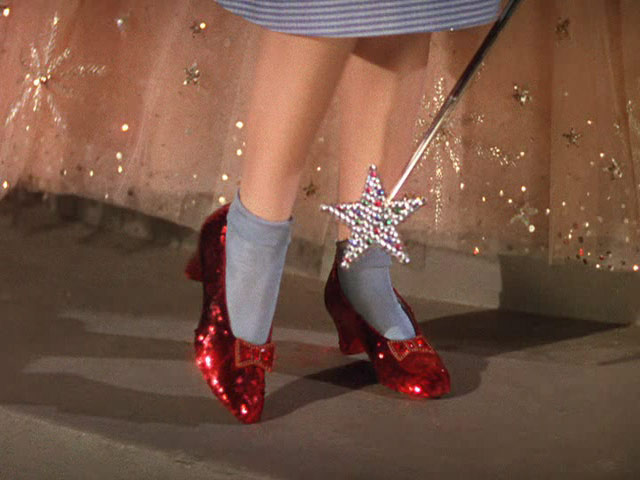
One film I worry about getting a remake, more than any other, is The Wizard of Oz. I know there have been adaptions, like The Wiz. But, my fear is that there would be a new version of the 1939 original. Given the current trends in Hollywood, I imagine it would be something like:


*Cast Megan Fox as Dorothy. Show cleavage.

*Cast Jim Carey as the Scarecrow. Make sure he overacts.

*Cast Jack Black as the Cowardly Lion. Give him an offensive catch-phrase.

*Cast Justin Timberlake as the Tin Man. Add ballads.


It's not just that. You know the amazing silk-stocking-tornado would be replaced with CGI. The deep creepiness of the Wicked Witch would become polished and perhaps become a motion-capture character. Munchkins? Make them virtual and you can have more of them. Emerald City would be nothing but a green screen project.


Yes, it may be possible to recreate The Wizard of Oz to be eye-poppingly fantastic. But, a hands-on creativity would be lost. The images that managed to be both somehow cozy, yet frightening would be gone. Sometimes, it's best to leave things with their dated charm, their echo of a past era, their familiar homeiness. It is true magic.


[Any other films you'd add to the "Please don't remake list? Add a comment!]

Thursday, July 9, 2009

Too Much Empathy?


I think genuine empathy may be something that is hardwired within us from birth. I'm sure it can be taught to some degree, but I confess to being a bit eccentric when it comes to "feeling sorry for" all things broken, unwanted, misunderstood, rejected, or treated unjustly. And it started young.

I had two beloved "collections" as a child. One was my Foreign Doll Collection. Always a sure hit for classroom Show and Tell. I had dolls from the Netherlands, Argentina, China, Lebanon, France...you get the idea. I'd study the country of my new acquisitions in the antique now known as an encyclopedia. Each name had to be authentic to their culture, so I had to educate myself.

My other collection, more secretive, was my Broken Doll Collection. Each one had a story. More often than not, they were spotted on the floor of the toy department...smudged, forgotten through no fault of their own. I was a fairly non-materialistic child, and rarely asked for toys. So when I spotted a victim-toy and asked for it, my mother would know I "felt sorry for it" and her follow-up question was usually, "Why? What's wrong with it?"

Of course, when I'd watch Rudolph and the story of the Island of Misfit Toys, I was always a bit worried that they may not get rescued. It was unthinkable. At least I'd rescued the bear with a loose arm, the doll with the odd hair, the stuffed dog with uneven eyes.

Honestly, until I was an adult, I'd had no idea this was an unusual manifestation of empathy. It must have been an ongoing cause of concern to family elders. After meeting my soon-to-be-husband, my astute grandmother told me she liked him very much. She then added, "I've always thought about the broken toys that you loved so much and was a bit afraid to find out who you'd marry. I'm very relieved."

I wish she hadn't worried about it. It makes me feel sorry for her.